Crafted for Comfort
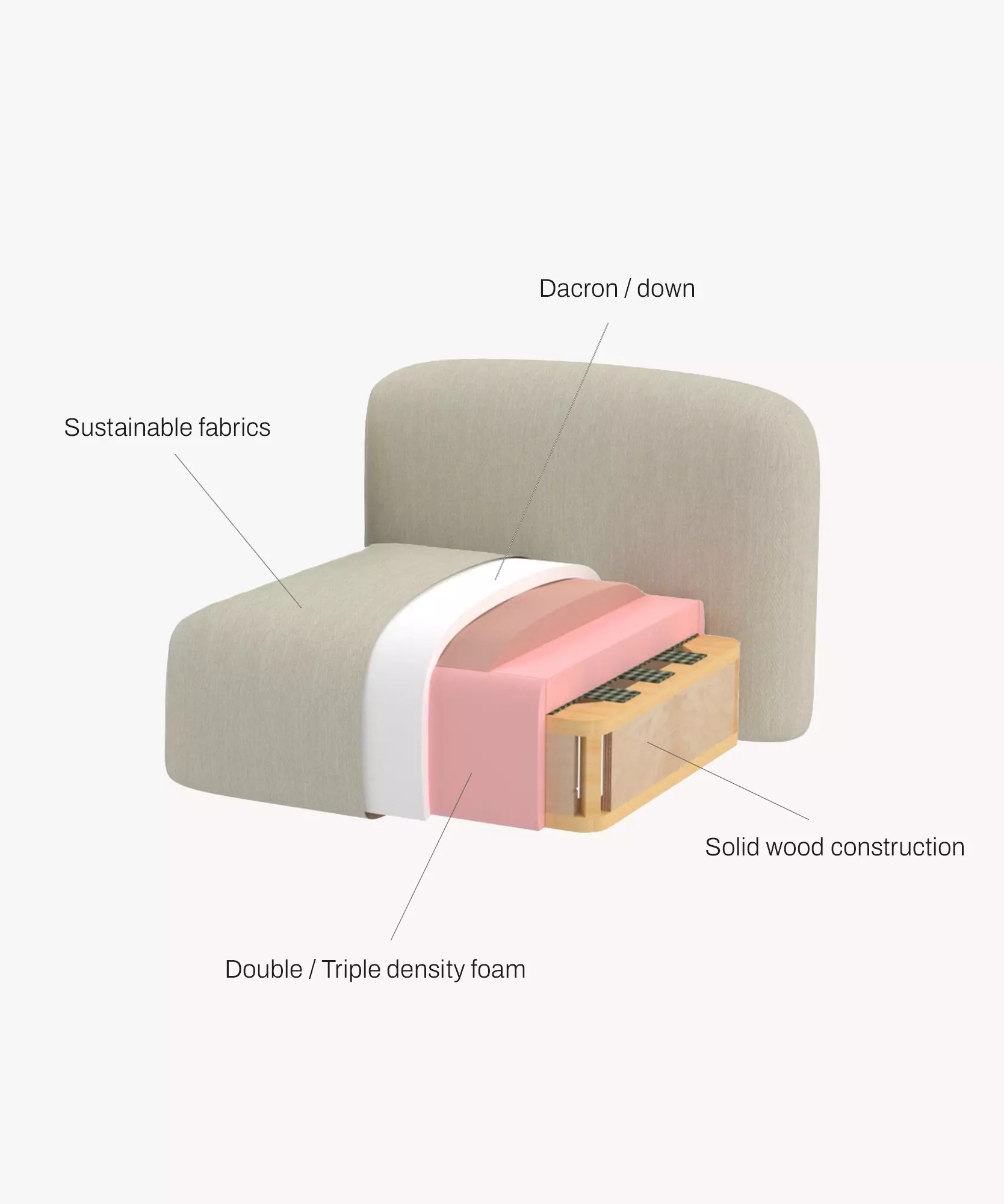
Every Paul Rogers sofa is built with comfort in mind. Depending on the design, we use either High Resilience sourced foam or a combination of High Resilience sourced foam and down. Some models feature double or triple-density foam to create seating that is both supportive and soft, while others include a touch—or a generous layer—of down for extra plushness and a relaxed, luxurious feel.
Here, you can explore the technical details behind our foam and down construction and discover what gives each Paul Rogers piece its signature balance of support and comfort.
Understanding What’s Inside Your Sofa
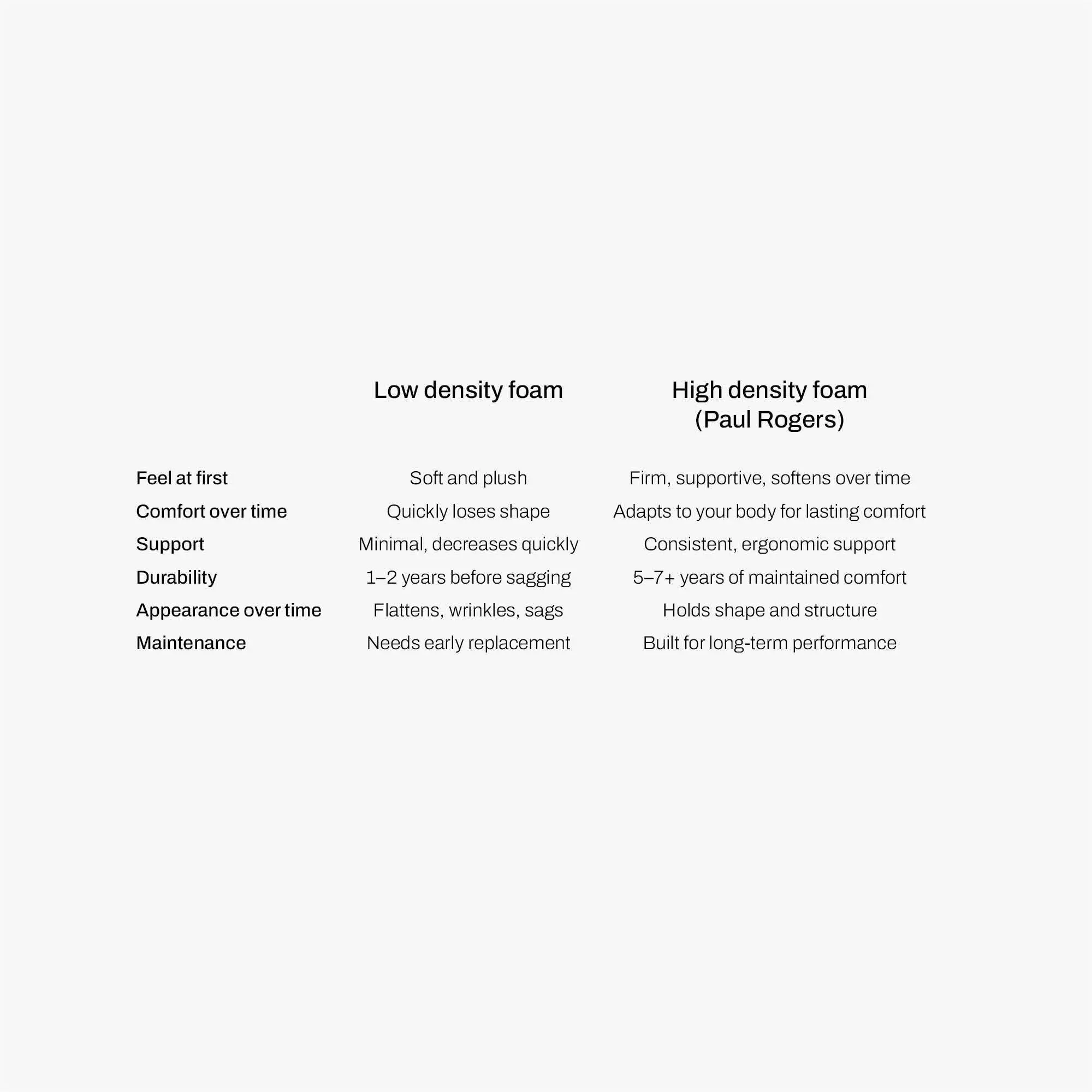
When you first sit on a Paul Rogers sofa, the cushions may feel slightly firmer than expected—and that’s by design. We use high-quality, high-density foam with a tightly packed structure that provides proper support from day one. Over the first few weeks, the foam gently softens and adapts to your body, finding that perfect balance between comfort and support, as the foam compresses and activates by the use of the sofa.
You can think of it like a new pair of leather shoes: firm and structured at first, but over time they mold perfectly to you, becoming softer and more comfortable with every use.
By contrast, sofas made with low-density foam may feel soft and plush immediately—but that comfort is short-lived. Within just a year or two, low-density foam tends to sag, flatten, and lose its supportive structure, leaving the sofa looking and feeling tired.
Our high-density foam cushions are built for long-term comfort and durability. Even through years of daily use—kids jumping, pets lounging, or endless movie nights—they maintain their shape, support, and inviting feel.
'Worn-in' sofa look
Sofas with a down layer offer exceptional comfort, combining down with a supportive layer of HR sourced foam. The down filling is secured by stitching the inner lining into channels, helping it stay evenly distributed.
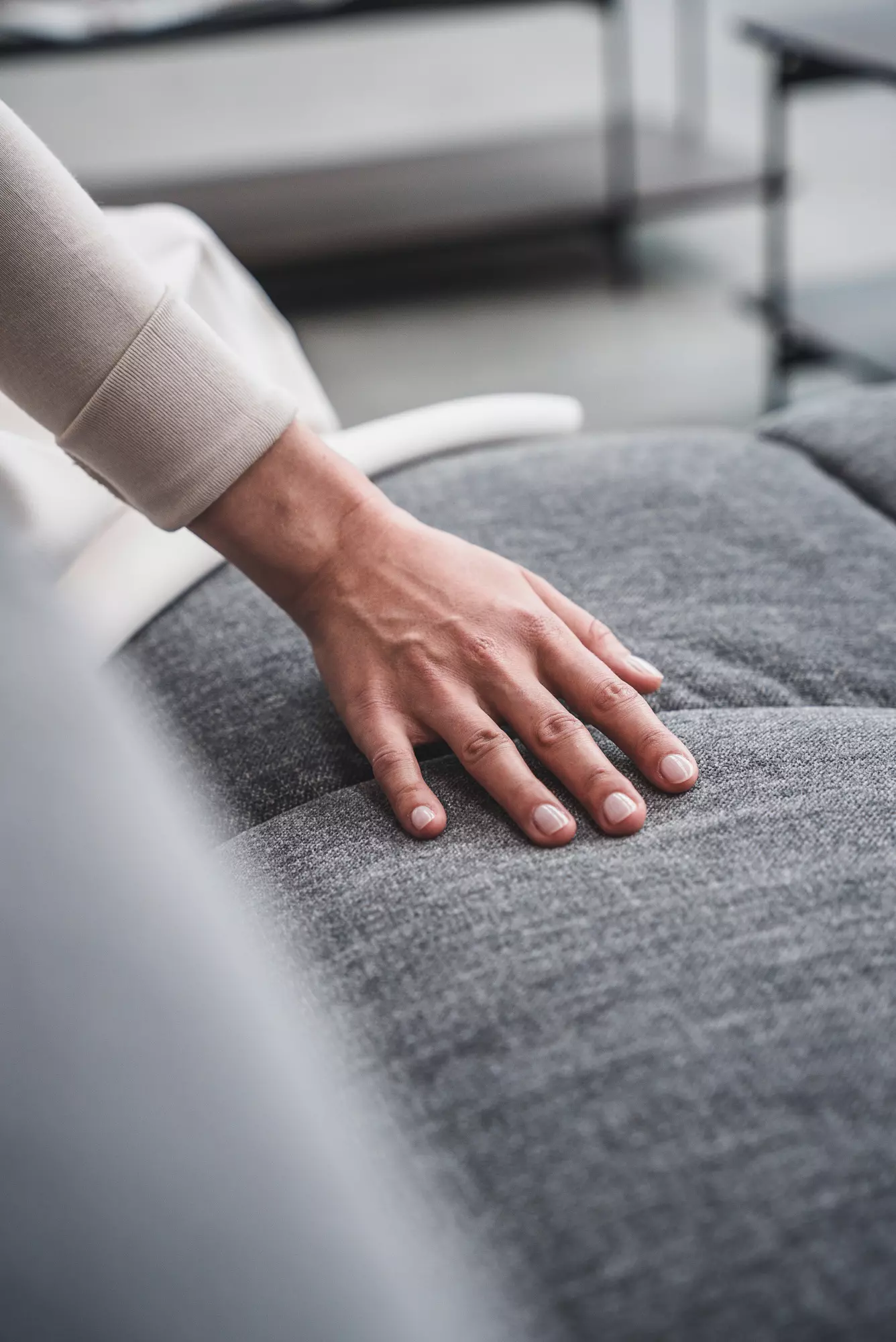
Because the top layer is so soft, the filling naturally shifts when the sofa is used, allowing the shape to change and evolve over time. Regularly fluffing and patting the cushions helps redistribute the down and maintain an even, comfortable surface—but it’s normal that the exact shape cannot be kept perfectly.
Designs that include a generous amount of down are intentionally crafted to have a relaxed, “worn-in” appearance. As time passes, the cushions become rounder and the seams follow this organic, softer form. This natural evolution is part of the design and contributes to the casual, inviting look that makes each piece uniquely comfortable.
How to fluf your sofa back into shape
Your sofa is built from the finest and strongest materials and is designed for longevity. To ensure its lifespan and to keep its original, plump form intact, regular maintenance is required. We recommend performing the following steps at least once a week.
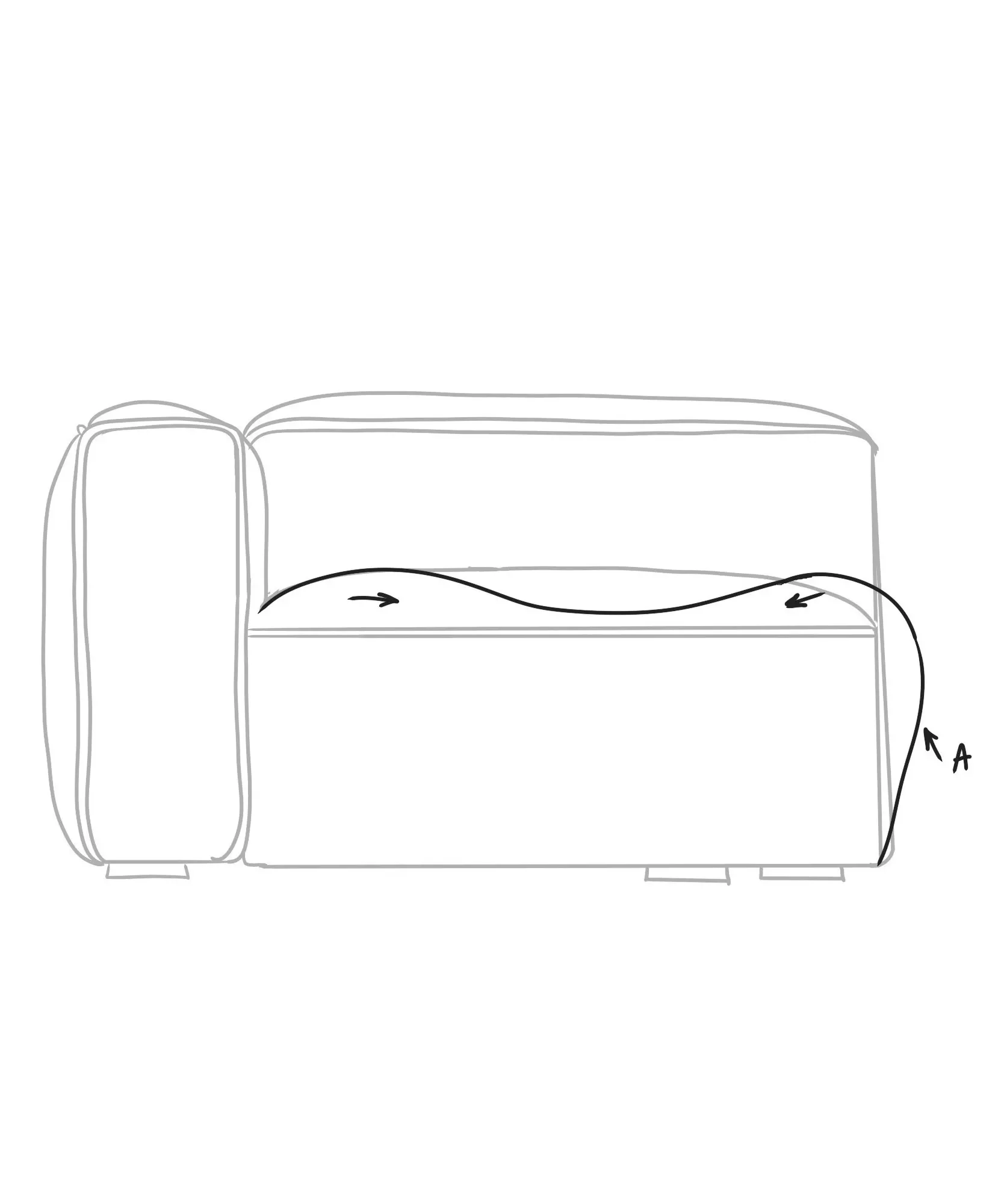
Seat Cushions (A):
Vigorously beat the seat from the front-underside. This helps to reposition the neutral down and/or feather filling and keep it evenly distributed.
Tip: If the cushions are modular, remove them temporarily and beat them along the sides and the bottom.
Back Cushions and Armrests (B):
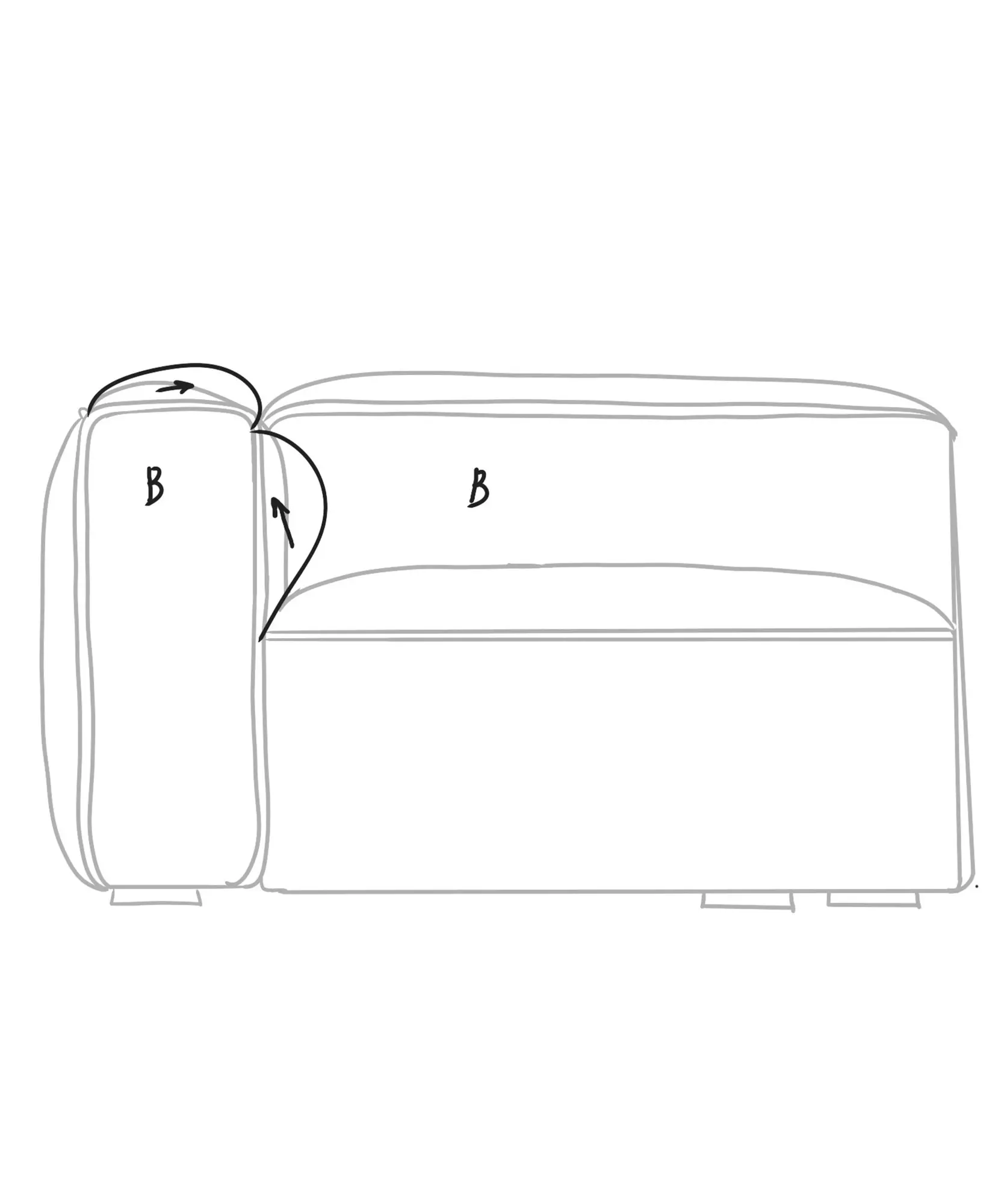
Carefully beat the backrests and the structure of the armrests from below and upwards.
Goal: Ensure the filling inside the back and arm sections remains smooth and fluffy.
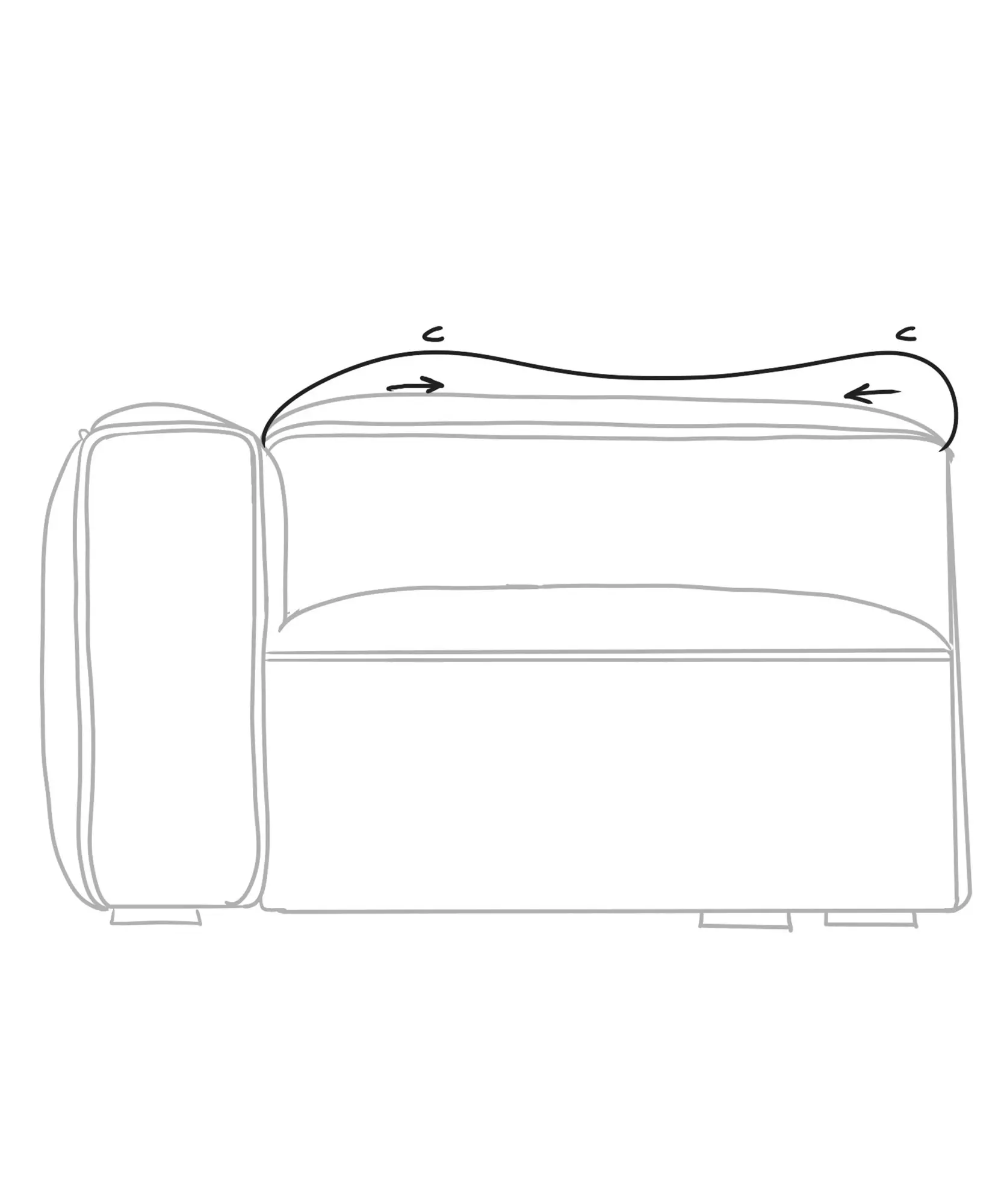
Top and Outer Surfaces (C):
Lightly beat the top of the armrests and the back.
Goal: Keep these areas smooth and neat.
Please note: Do not beat the top of the seat cushion. Excessive beating on the top surface will cause the feathers to spread out, accelerating the flattening process during natural use. Concentrate on the underside and sides to push the filling back towards the centre